Tagung gegen Menschenhandel | Conference in Berlin
11th February 2025
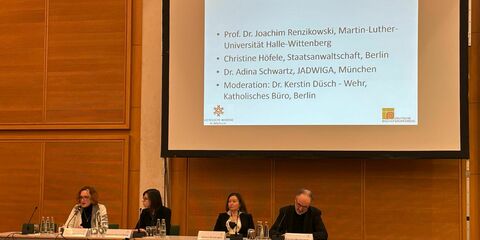
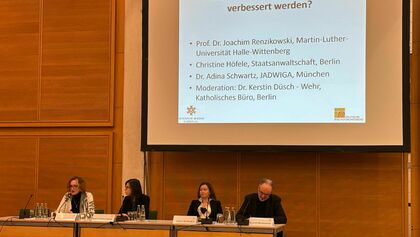
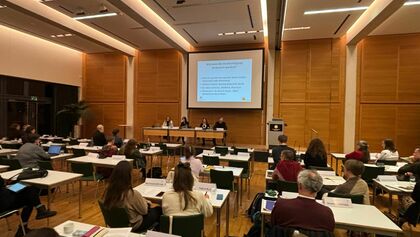
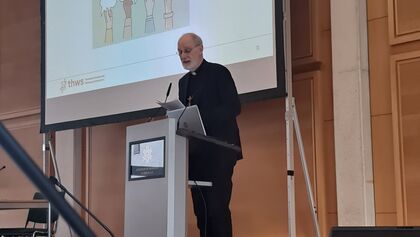
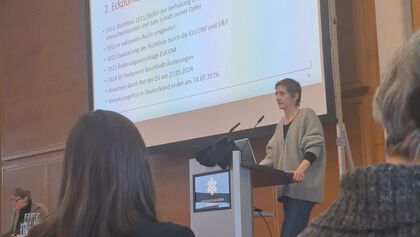
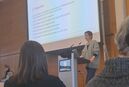
The Santa Marta Group recently attended the 'Tagung gegen Menschenhandel' conference in Berlin, a key gathering of experts, practitioners, policymakers and survivors working to address human trafficking across Germany and Europe. Over three days, the conference offered valuable insights into the evolving legislative landscape, the lived realities of survivors, and the growing need for deeper multilateral collaboration.
The opening evening provided an important introduction to the history and development of the conference through discussions with long-time organisers and partners from networks such as RENATE. These early conversations helped us better understand the challenges Germany faces in shaping consistent anti-trafficking law across its federal structure, as well as the ongoing debates around models of legislation used to confront sexual exploitation.
On the second day, sessions led by survivors and organisations supporting victims encouraged a reconsideration of terminology, particularly the shift from “victim” to “survivor,” a development that is gaining wider recognition across Europe. The discussions also drew attention to areas that are often overlooked, including the high number of male survivors subjected to labour exploitation in sectors such as meat processing.
Policy-focused sessions expanded the lens to the wider EU context. Speakers from the European Commission emphasised that meaningful progress in Germany will depend heavily on driving reforms at the European level. A later debate among legal experts revealed deep divisions over whether the most effective action should be taken nationally, federally, or through EU-wide mechanisms.
Informal conversations throughout the day with Church leaders, diocesan representatives, and academics enriched our understanding of the broader social structures supporting anti-trafficking work in Germany.
The final day centred on the amended EU Directive 2011/36 and its implications for those working directly with survivors. Following this, the Santa Marta Group presented on our international work and answered questions on policing collaboration, our engagement in Eastern Europe, and the strengths of the British Modern Slavery Act. The level of interest from other organisations underlined the desire for closer international cooperation.
A concluding session on migration and trafficking offered a data-driven challenge to the political narratives often surrounding this topic. It highlighted how trafficking intersects with vulnerabilities rather than with simplistic notions of migration flows.
Overall, attending the 'Tagung gegen Menschenhandel' was a deeply valuable experience. It strengthened our understanding of the German and European landscape, clarified the major debates shaping future policy, and allowed us to build meaningful relationships with partners across sectors.